Ahead of 2027, New York City finalized its Fiscal Year 2027 budget on June 30th. Between the mayor and City Hall, billions of dollars were approved to be spent in the hopes of keeping New Yorkers from being priced out of their communities.
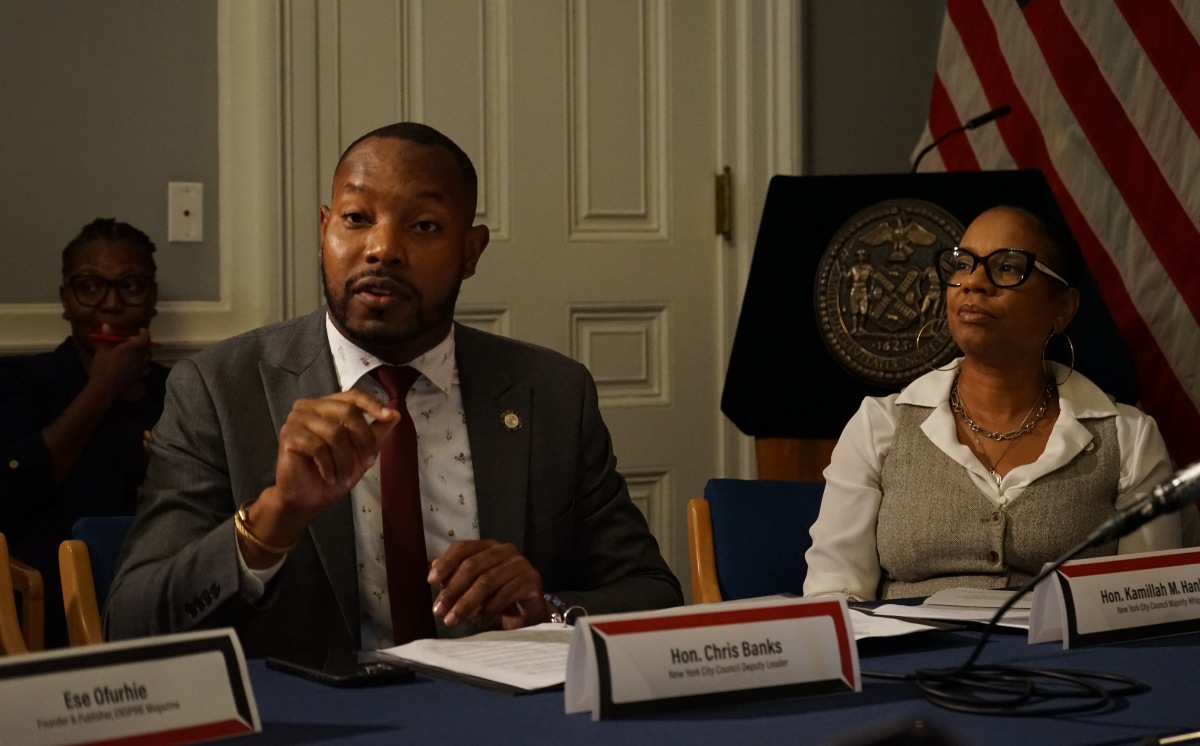
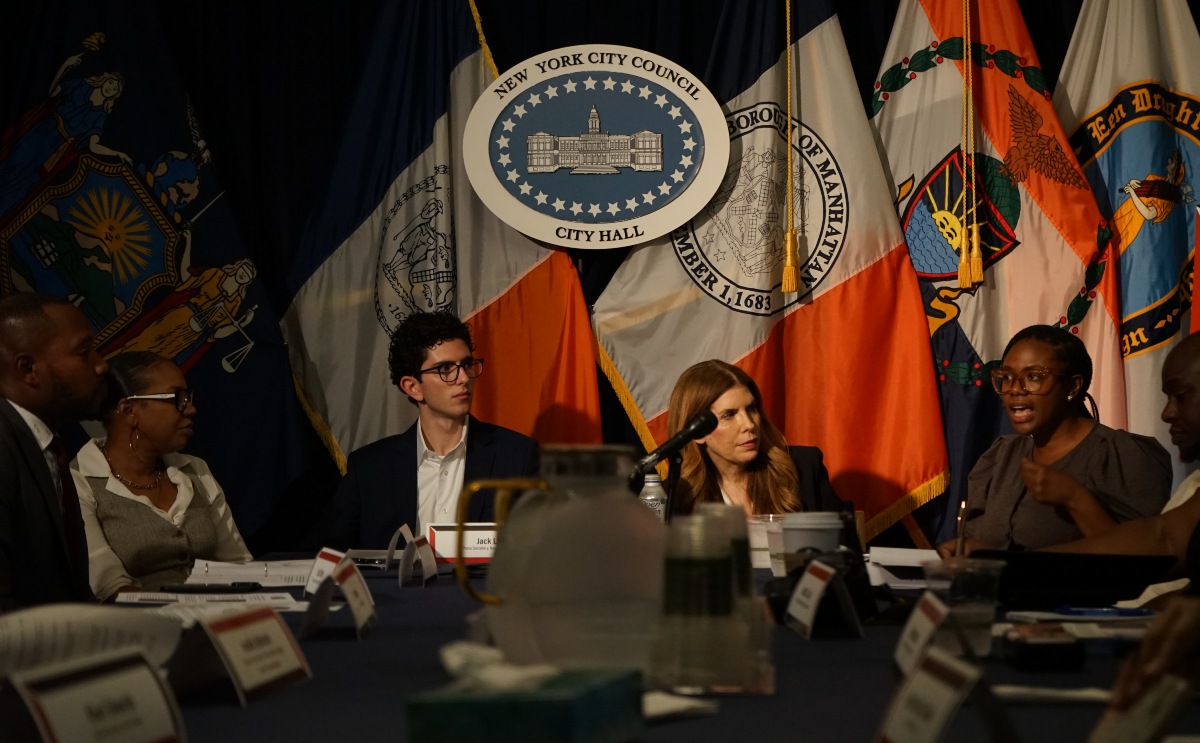
On July 21st, City Hall hosted a roundtable with Black community media outlets to discuss how the investments they made will impact Black and Brown communities across the five boroughs. Those in attendance were Speaker Julie Menin representing Manhattan, Deputy Speaker Dr. Nantasha Williams representing Queens, Majority Whip Kamillah M. Hanks representing Staten Island, Deputy Leader Chris Banks representing Brooklyn, and Council Member Kevin C. Riley representing the Bronx.
Protecting Black Homeownership
Deputy Speaker Dr. Nantasha Williams pointed out that homeownership is one of the biggest challenges Black New Yorkers face.
“It’s not a thing anymore to want to become a homeowner in New York City,” Williams said. Stressing this as an issue that is on the councils foremind.
The budget includes $5.15 million for the Homeowner Stabilization Services Initiative. A program that provides services such as real estate planning, foreclosure prevention, deed theft protection, and pre-purchase counseling.
Foreclosure prevention helps homeowners keep their homes or exit a mortgage smoothly when they cannot make payments, while deed theft protection assists homeowners who have been targeted by scams that illegally transfer ownership of a property by stealing an identity. Pre-purchase counseling prepares first-time buyers by educating them on the logistics behind mortgages, budgeting, and the homebuying process. Information that many people of color did not have access to growing up.
“While we need to protect and and stabilize existing home ownership units, we also feel we should provide resources for those who want to become homeowners,” says Williams, who believes the last census showing New York City losing nearly 200,000 Black residents is a boulder that will keep on rolling.
“I have a feeling that when we do the next census, we’ll see another exodus of Black New Yorkers,” she stated.
Arguing that it is because, “Black homeowners have been under attack since predatory lending.”
Predatory lending is the unethical practice where lenders use unfair tactics to trap borrowers, usually minority ones, into loans they cannot afford.
That’s why, to reduce the financial responsibilities on homeowners, the Council also rejected a proposed 9.5% property tax increase, stating that the city’s budget should not be balanced “on the backs of working New Yorkers.”
Investing in Housing and Neighborhoods
Affordable Housing remains one of the Council’s largest priorities. With the budget providing an additional $7.5 million to help the New York City Housing Authority (NYCHA) repair thousands of vacant apartments, which will allow more public housing units to become available for families who need them.
Deputy Leader Chris Banks said these investment towards NYCHA reflects his commitment to “protecting and preserving public housing.”
The Council also approved reforms for the city’s construction code that could create up to 35,000 new homes on nearly 3,000 small vacant or underused lots across the city.
Council Member Kevin C. Riley highlighting that it is known as the “Missing Tooth” proposal. An initiative that will speed up affordable housing construction on underutilized lots across the five boroughs.
“Makes it more financially viable for people to build on those lots,” Riley explained.
For neighborhoods like those in his district, Riley said the goal is to create affordable housing while preserving the culture that makes up his neighborhood.
“Preserving the Caribbean nature of the district while also producing affordable housing,” he said.
Julie Menin, the speaker of the New York City Council, also discussed what she called an “outside-the-box” housing proposal.
After studying 215 public library sites, the Council found that many locations could support 100% affordable housing above these newly rebuilt libraries.
“Big win-win,” Menin said. “Brand new state-of-the-art libraries for our community while also providing affordable housing.”
Equity and Discrimination
Beyond housing, Council members emphasized investments aimed to address racial inequities.
The budget allocated $2.1 million to strengthen the impact of the Commission on Racial Equity (CORE), an agency responsible for holding local government accountable in advancing racial equity and supporting community initiatives.
An additional $1.6 million was approved for the New York City Commission on Human Rights (CCHR), which investigates complaints involving discrimination in housing, employment, and public accommodations.
Menin described the agency as “unbelievably underfunded,” saying the additional investment will help improve response times for those residents reporting discrimination.
Affordability
Council members also highlighted several initiatives designed to reduce everyday costs for working New Yorkers.
The budget expands Fair Fares NYC by 300,000, allowing approximately 1.3 million New Yorkers to qualify for half-price subway, bus, and paratransit fares.
“Expanded fair fares to the largest level the city has ever had,” Menin said.
The Council also created a new housing voucher program for residents facing eviction or whose incomes make them ineligible for CityFHEPS, the city’s primary rental assistance program.
Menin said the expansion was necessary to prevent more families from entering the shelter system.
“We want to get people into supportive housing because it’s the right thing to do,” she said.
Investing in our Youth
One of the budget’s most historic investments was in education. An achievement no other city in the country has done, acquiring the largest college savings program.
Every public school and charter school kindergartner will now receive $1,000 in a NYC Kids RISE college savings account.
The money will be deposited into the state’s 529, a tax-advantaged investment account that grows over time and can later be used to pay for higher education expenses such as tuition, books, and fees.
“We see this as the best way to address income inequality,” Menin said. “That investment will continue to grow and compound over time.”
She noted that research shows “Students with a college savings account are 3 times more likely to attend college than students who don’t have one. And earn double wages in the course of their lifetime.”
Supporting Small Businesses
To strengthen the city’s local economies, the budget has invested more than $33 million in Small Business Services and workforce development programs.
The funding includes assistance for neighborhood businesses and their employees, while the legislations which the city council is working on will reduce the amount of time required for new businesses to complete city inspections before opening.
Legislations that are important because there are stores that “for 2 years they have tried to open” Menin noted.
Not only that, but, “more small businesses closed than opened. This is shameful,” she said.
Supporting Immigrant Communities
The Council also reaffirmed its support for immigrant communities by allocating $86.4 million for immigration legal service providers that help families navigate the immigration system.
An additional $600,000 was also allocated towards the Haitian Response Initiative, which provides legal assistance, support services, and information following recent changes to Temporary Protected Status.
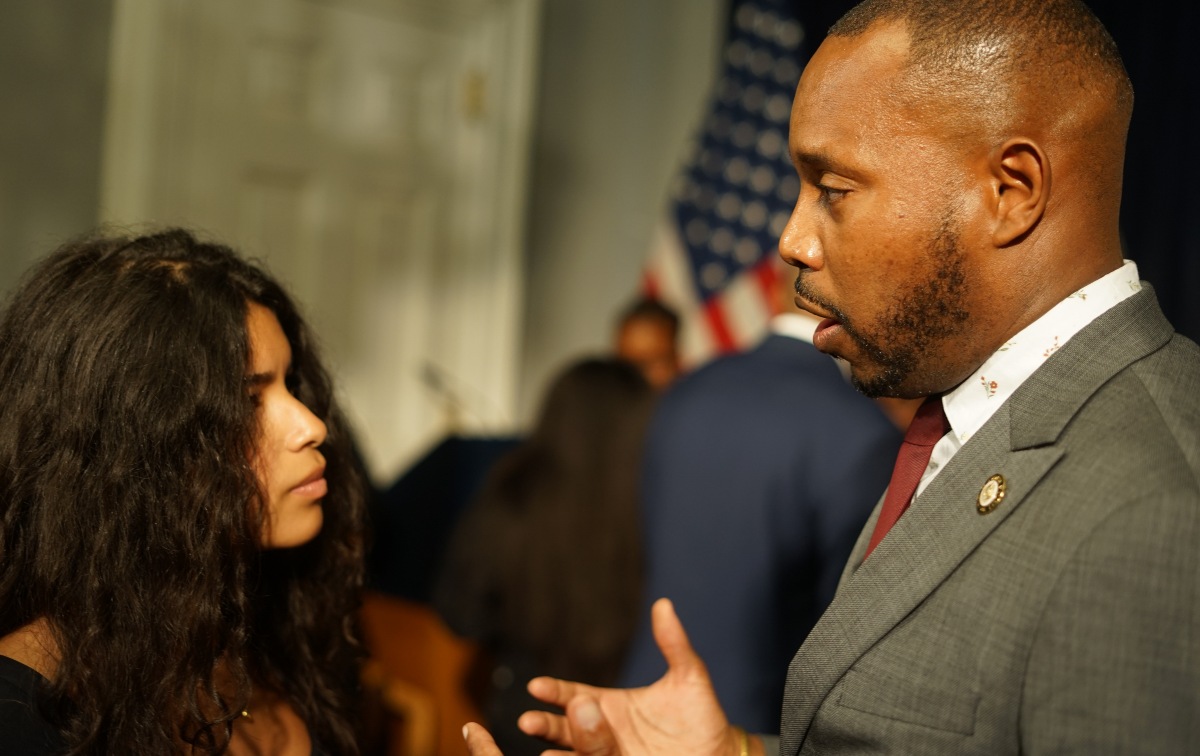
As the press roundtable came to an end, Banks emphasized that the fiscal budget for 2027 represents more than spending decisions.
“As we continue to fight for equity and opportunity, we must remain focused on a simple principle,” Banks said. “When we invest in people, we strengthen our community.”